Coastal ports are under constant pressure to increase throughput while dealing with a fixed—or even shrinking—amount of usable yard space. Unlike inland logistics hubs, many coastal terminals are constrained by geography: seawalls, water boundaries, urban development, and legacy infrastructure limit how far expansion can go. At the same time, container volumes continue to grow, driven by global trade, larger vessels, and tighter supply chain schedules.
In this environment, narrow-span Rubber Tyred Gantry (RTG) cranes have become a strategic solution for maximizing storage density and operational efficiency. By redesigning yard layouts around tighter gantry spans, ports can significantly increase container stacking capacity without expanding their physical footprint.
This article explores how narrow-span RTG cranes work, why they are especially suited for coastal terminals, and how they transform space-constrained port operations into high-efficiency container handling systems.
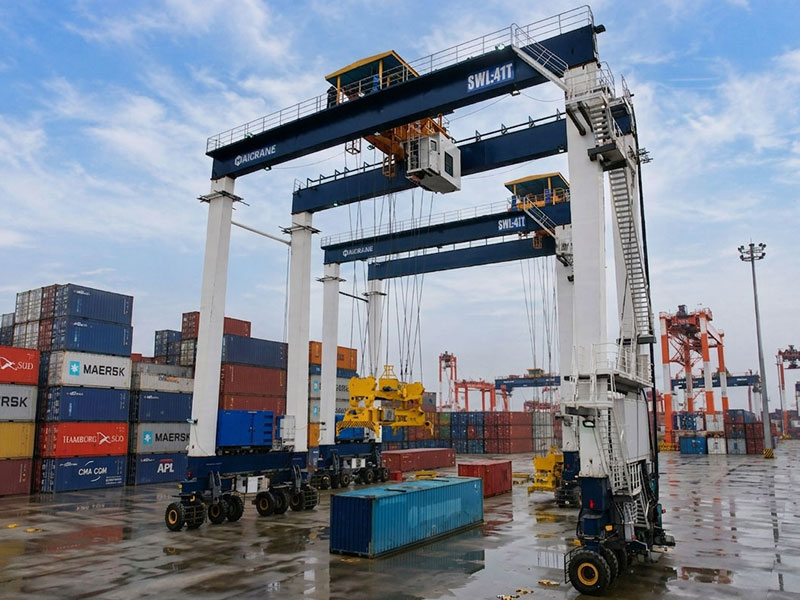
The Space Challenge in Coastal Port Terminals
Coastal ports face a unique set of constraints that directly impact yard design:
- Limited land availability near waterfronts
- High cost of land reclamation or expansion
- Existing infrastructure fixed in outdated layouts
- Irregular yard geometry due to shoreline boundaries
- Strict environmental and zoning regulations
- High container turnover requiring rapid stacking and retrieval
Traditional wide-span RTG systems were designed for large, open inland container yards. In contrast, coastal ports often require compact, highly optimized layouts where every meter of width matters.
This is where narrow-span RTG cranes become highly effective.
What Is a Narrow-Span RTG Crane?
A narrow-span RTG crane is a mobile gantry crane designed with a reduced gantry width compared to conventional RTG systems. Instead of covering wide multiple-lane container blocks, it operates over more compact storage lanes, typically optimized for:
- 2 to 4 container rows (depending on configuration)
- Reduced aisle width between stacks
- Higher container density per square meter
- Shorter travel distances within the yard
By narrowing the span, the crane becomes more specialized for dense stacking environments where space efficiency is more important than maximum lane coverage.
Rubber Tyred Gantry Crane systems in narrow-span configurations are increasingly adopted in modern coastal terminals aiming to improve land utilization efficiency.
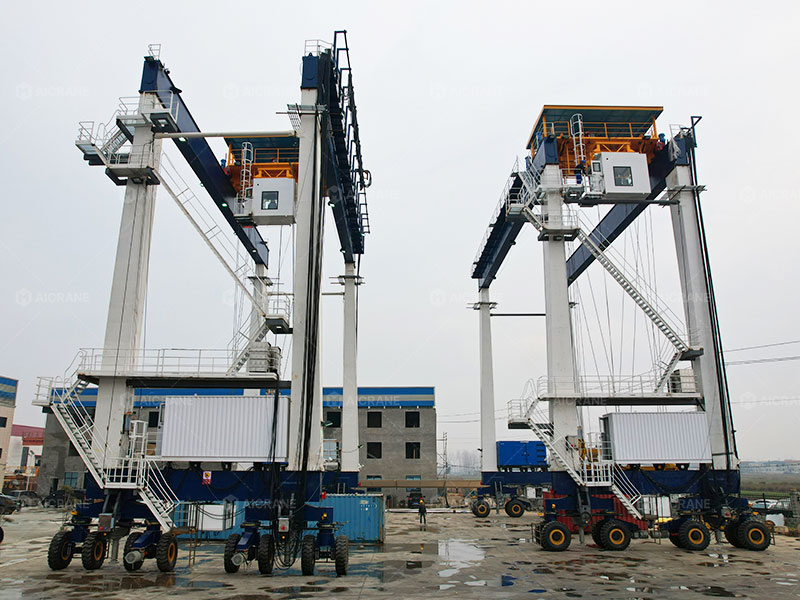
How Narrow Span Directly Improves Storage Density
The core advantage of narrow-span RTG cranes is simple: less unused space between container stacks.
1. Reduced Lane Width Waste
In traditional RTG layouts, wider spans require broader access lanes for crane clearance and container truck movement. However, in narrow-span configurations:
- Aisle width is minimized
- Container rows are placed closer together
- Dead space between blocks is reduced
This allows ports to convert previously “unused airspace” into actual storage capacity.
2. Higher Container Block Density
Narrow-span RTG container gantry cranes enable tighter stacking blocks. Instead of spreading containers horizontally, operators can build:
- More compact yard blocks
- Higher density storage zones
- Multi-layer stacking configurations
This increases TEU capacity per hectare significantly, especially in constrained terminals.
3. Optimized Vertical Utilization
Because horizontal expansion is limited, coastal ports often rely on vertical stacking. Narrow-span RTGs support:
- Stable multi-high stacking (1-over-5 or higher configurations depending on design)
- Better load distribution in tight spaces
- Improved access to upper container tiers
The result is a more three-dimensional use of available yard space.
Improved Yard Layout Flexibility
Narrow-span RTG cranes allow terminal planners to redesign yard layouts more efficiently.
Modular Yard Design
Instead of large, wide blocks, ports can create:
- Modular container blocks
- Repeating narrow lanes
- Flexible reconfiguration zones
This modularity is critical in ports where cargo mix changes frequently.
Better Use of Irregular Spaces
Coastal ports often have irregular land shapes due to shoreline boundaries. Narrow-span RTGs can adapt to:
- Non-rectangular yard areas
- Sloped or segmented zones
- Reclaimed land with structural limitations
This flexibility reduces wasted corner or edge space.
Integration with Rail and Truck Interfaces
Many coastal terminals must integrate rail sidings or truck gates within limited space. Narrow-span RTGs allow:
- Closer alignment with rail tracks
- Shorter truck turnaround distances
- Reduced interference between transport modes
Operational Efficiency Gains Beyond Storage
While storage density is the main benefit, narrow-span RTGs also improve operational efficiency.
1. Reduced Travel Distance
Shorter spans mean:
- Faster crane travel between stacks
- Reduced tire wear and energy consumption
- Lower cycle times per container move
This improves overall yard productivity.
2. Faster Container Retrieval
In dense layouts, containers are closer together and more logically organized. This reduces:
- Search time within yard blocks
- Rehandling frequency
- Congestion during peak operations
3. Improved Traffic Flow
Narrow-span RTG layouts create more controlled traffic patterns:
- Dedicated lanes for trucks
- Predictable crane movement paths
- Reduced cross-traffic interference
This is especially important in coastal ports with high vessel turnaround pressure.
Structural and Engineering Considerations
Designing narrow-span RTG gantry cranes for coastal ports requires careful engineering to maintain stability and performance.
1. Load Distribution in Compact Spans
Even though the span is narrower, cranes still handle heavy container loads. Engineers must ensure:
- Even load distribution across gantry beams
- High torsional rigidity in the frame
- Reinforced wheel assemblies for tight turning radii
2. Stability in High-Density Yards
Narrow spacing increases the importance of precise control systems:
- Anti-sway technology becomes critical
- Positioning accuracy must be higher
- Braking systems must respond quickly in confined areas
3. Corrosion Resistance in Coastal Environments
Coastal ports expose RTG cranes to salt, humidity, and wind. Therefore:
- Anti-corrosion coatings are essential
- Electrical systems require sealed protection
- Structural steel must be treated for marine environments
Automation and Smart Control Integration
Modern narrow-span RTG systems are increasingly integrated with smart technologies to further optimize space usage.
Automated Stacking Optimization
Software systems can:
- Determine optimal stacking positions
- Reduce unnecessary rehandling
- Balance yard density with accessibility
Real-Time Yard Management Systems
Digital yard control platforms help operators:
- Track container locations
- Optimize crane routes
- Reduce congestion in narrow lanes
Semi-Automated Operation Modes
Some terminals deploy semi-automated RTGs that:
- Follow predefined paths
- Reduce human error in tight spaces
- Improve consistency in high-density operations
Environmental and Energy Efficiency Benefits
Space optimization also leads to sustainability improvements.
Reduced Fuel Consumption
Shorter crane travel distances result in:
- Lower diesel consumption (for diesel RTGs)
- Reduced CO₂ emissions
- Lower operating costs
Lower Land Use Impact
By maximizing storage within existing boundaries, ports can:
- Avoid costly land reclamation
- Reduce environmental disruption
- Improve compliance with coastal zoning laws
Real-World Application in Coastal Ports
Narrow-span RTG systems are especially valuable in:
- Urban coastal container terminals
- Island ports with limited expansion space
- Historic ports surrounded by city infrastructure
- High-volume transshipment hubs
These environments demand maximum output from minimal space, making narrow-span RTGs a practical necessity rather than just an option.
Challenges and Limitations
Despite their advantages, narrow-span RTG cranes also present challenges:
- Reduced flexibility for oversized cargo handling
- Higher dependency on precise yard planning
- Increased need for operator training
- Potential congestion if not properly managed
However, with proper system design and automation, these challenges can be effectively controlled.
Conclusion
Narrow-span RTG cranes represent a highly effective solution for coastal ports facing severe space constraints. By reducing gantry width and optimizing yard layout density, they enable terminals to significantly increase container storage capacity without expanding physical land.
Their advantages extend beyond space savings—improving operational efficiency, reducing energy consumption, and enabling smarter yard management systems. When combined with automation and modern control technologies, narrow-span RTGs become a core component of next-generation high-density port logistics.
As global trade continues to grow and coastal land becomes increasingly limited, these cranes will play an even more critical role in helping ports maximize every square meter of available space while maintaining high-speed, reliable container handling performance.