Concrete construction in Nigeria often involves complex site conditions, changing project requirements, and the need for efficient material delivery. From residential buildings in expanding urban areas to commercial developments and infrastructure projects, maintaining a continuous concrete supply is essential for structural quality and construction speed. However, traditional concrete production and transportation methods may create challenges when sites are limited in space, located far from ready-mix suppliers, or require concrete placement in difficult positions.
Concrete mixer pumps provide an integrated approach by combining concrete mixing and pumping functions into one machine. Instead of producing concrete at one location and transporting it separately before pumping, contractors can mix and deliver concrete directly at the construction point. This flexibility makes concrete mixer pumps in Nigeria suitable for different building stages, including foundation works, column construction, and slab pouring. By adapting to the changing demands of each stage, they help Nigerian contractors improve efficiency, reduce handling steps, and maintain more consistent concrete placement.
How Concrete Mixer Pumps Improve Foundation Construction Efficiency
Supporting Concrete Placement in Early Structural Stages
The foundation is the first major stage of any building project, and its quality determines the stability of the entire structure. Whether constructing residential buildings, warehouses, commercial facilities, or multi-story developments, foundations require large amounts of concrete delivered accurately and continuously.
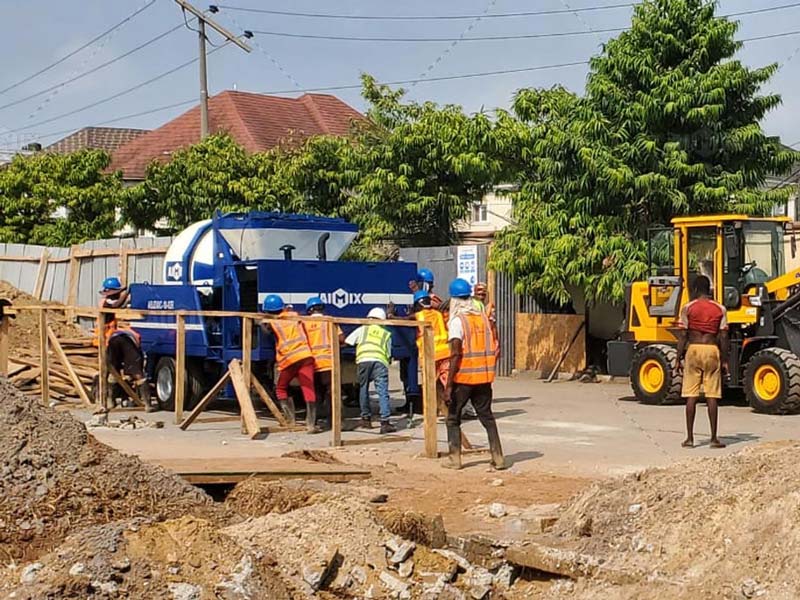
In Nigeria, many construction sites face challenges such as limited access roads, restricted working areas, or long distances from centralized concrete suppliers. These conditions can make conventional concrete transportation inefficient. Concrete mixer pumps solve this issue by producing concrete on-site and pumping it directly into foundation areas.
The integrated design reduces the dependence on multiple machines. Aggregates, cement, and water are processed within the equipment, and the fresh concrete is immediately transferred through the pumping system. This shortens the material journey and reduces delays between mixing and placement.
Handling Foundations in Difficult Access Locations
Foundation construction often requires concrete to reach locations that are not easily accessible by traditional equipment. Deep foundations, narrow plots, and urban construction zones may prevent concrete trucks from approaching the exact pouring area.
A concrete mixer pump provides greater positioning flexibility. The pump pipeline can extend into restricted areas while the machine remains stationed in a more accessible location. This capability is particularly useful for Nigerian projects where construction sites may be surrounded by existing buildings, narrow streets, or uneven terrain.
Reducing Concrete Quality Risks During Foundation Pouring
Foundation concrete must achieve reliable strength because it supports the entire structure above. Delays during transportation or waiting periods before placement can affect concrete workability.
By combining mixing and pumping in one system, concrete mixer pumps help reduce unnecessary waiting time. Fresh concrete can move from production to placement faster, supporting more consistent construction performance.
Concrete Mixer Pumps for Column Construction and Vertical Structures
Delivering Concrete Where Traditional Methods Become Difficult
After foundation completion, column construction introduces a different challenge: vertical concrete placement. Columns often require concrete to be delivered upward through reinforcement cages and formwork systems while maintaining structural integrity.
Traditional methods may require cranes, buckets, or additional labor for concrete movement. These approaches can increase handling complexity and slow down construction progress.
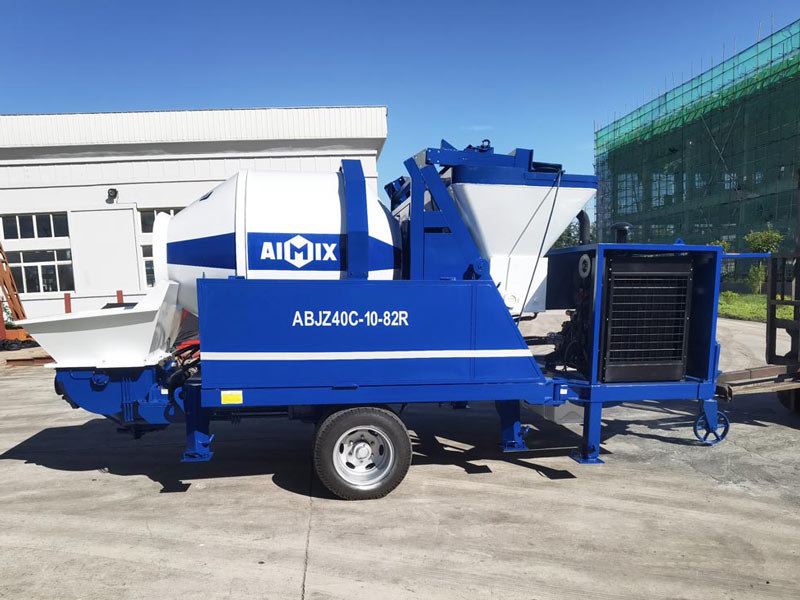
Concrete mixer pumps provide a more direct solution. The pumping system creates a controlled pathway from the machine to the column location, allowing concrete to be delivered vertically with less manual intervention.
Maintaining Continuous Concrete Flow During Column Pouring
Column construction requires careful coordination because interruptions can affect bonding between concrete layers. A continuous supply of concrete helps maintain a more uniform structure and reduces potential weaknesses caused by uneven placement.
The ability of concrete mixer pump for sale to produce and pump concrete simultaneously supports this continuous workflow. Contractors can adjust production according to actual placement speed, creating a more synchronized construction process.
Improving Productivity on Multi-Story Building Projects
Nigeria’s urban development has increased demand for multi-story residential and commercial buildings. As building height increases, efficient vertical concrete delivery becomes increasingly important.
Concrete mixer pumps provide an advantage because the pumping distance can be extended through pipelines while maintaining a compact equipment footprint at ground level. This makes them suitable for projects where space is limited but vertical construction requirements are significant.
Supporting Slab Construction With Flexible Concrete Delivery
Accelerating Large-Area Concrete Placement
Slab construction requires the placement of concrete across wide horizontal areas while maintaining consistent thickness and surface quality. Floors, parking structures, and commercial building slabs often involve large pouring zones that require efficient material distribution.
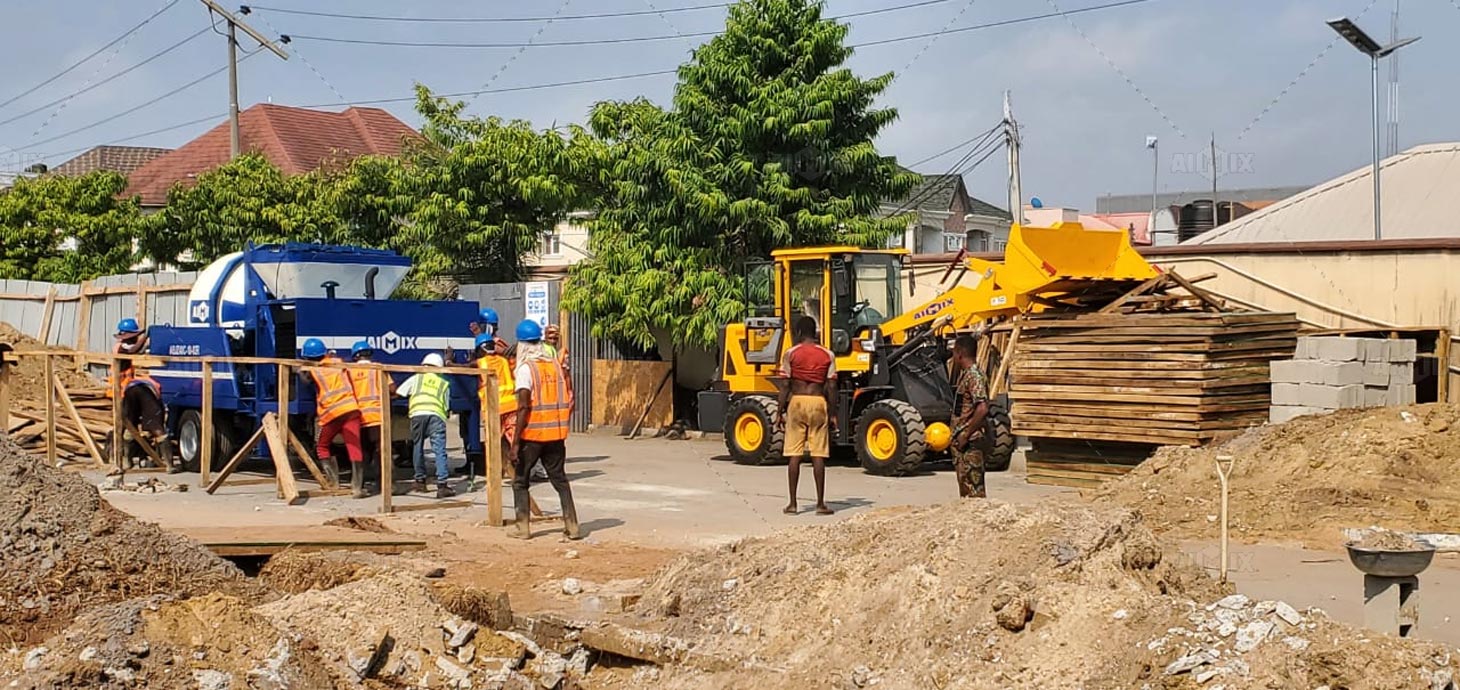
Concrete mixer pumps help simplify this process by allowing concrete to be delivered directly to different sections of the slab. Instead of repeatedly moving concrete manually or relying on multiple transportation steps, workers can focus on spreading, leveling, and finishing operations.
This improves workflow efficiency and allows construction teams to complete slab pouring within a shorter timeframe.
Adapting to Different Building Project Conditions
One of the strongest advantages of concrete mixer pumps is adaptability. Nigerian construction projects vary widely in scale, location, and complexity. A small residential building may require flexible concrete supply within a confined area, while a commercial project may demand faster and more continuous placement.
The same equipment can support different applications by adjusting pumping distance, output requirements, and working methods.
Reducing Equipment Congestion on Construction Sites
Construction sites are often crowded with materials, workers, and machinery. Too many separate machines can create operational conflicts and reduce available working space.
Because concrete mixer pumps integrate several functions, they require fewer supporting machines around the site. This creates a cleaner workflow and allows contractors to organize construction activities more efficiently.
Why Nigerian Contractors Choose Concrete Mixer Pumps for Complete Building Processes
One Machine Supporting Multiple Construction Stages
The major advantage of small concrete mixer pumps is their ability to support different phases of building construction. They are not limited to one specific application. The same equipment can assist with foundation pouring, column construction, slab placement, and other concrete works.
This versatility reduces the need for separate concrete production and delivery arrangements throughout the project lifecycle.
Balancing Efficiency, Flexibility, and Cost Control
For Nigerian contractors, construction efficiency is closely connected with cost management. Equipment that reduces labor requirements, minimizes transportation dependence, and improves concrete utilization can provide long-term economic benefits.
Concrete mixer pumps create value by simplifying the concrete workflow. They reduce the number of operational steps while providing the flexibility required for diverse construction environments.
From the first foundation pour to the final slab placement, concrete mixer pumps offer a practical method for maintaining reliable concrete supply. Their integrated design allows contractors to respond to changing project conditions while improving productivity at every stage of building construction.