For bridge contractors in Java, Indonesia, one of the most important decisions is choosing the right concrete production system. A 500-meter bridge project demands stable supply, flexible relocation, and strict control of production cost.
Therefore, many project managers ask whether a 60 m³/h mobile concrete batching plant is powerful enough for such a large-scale structure.
To answer this, we need to look at real construction demand, equipment capability, and on-site efficiency from a practical engineering perspective.
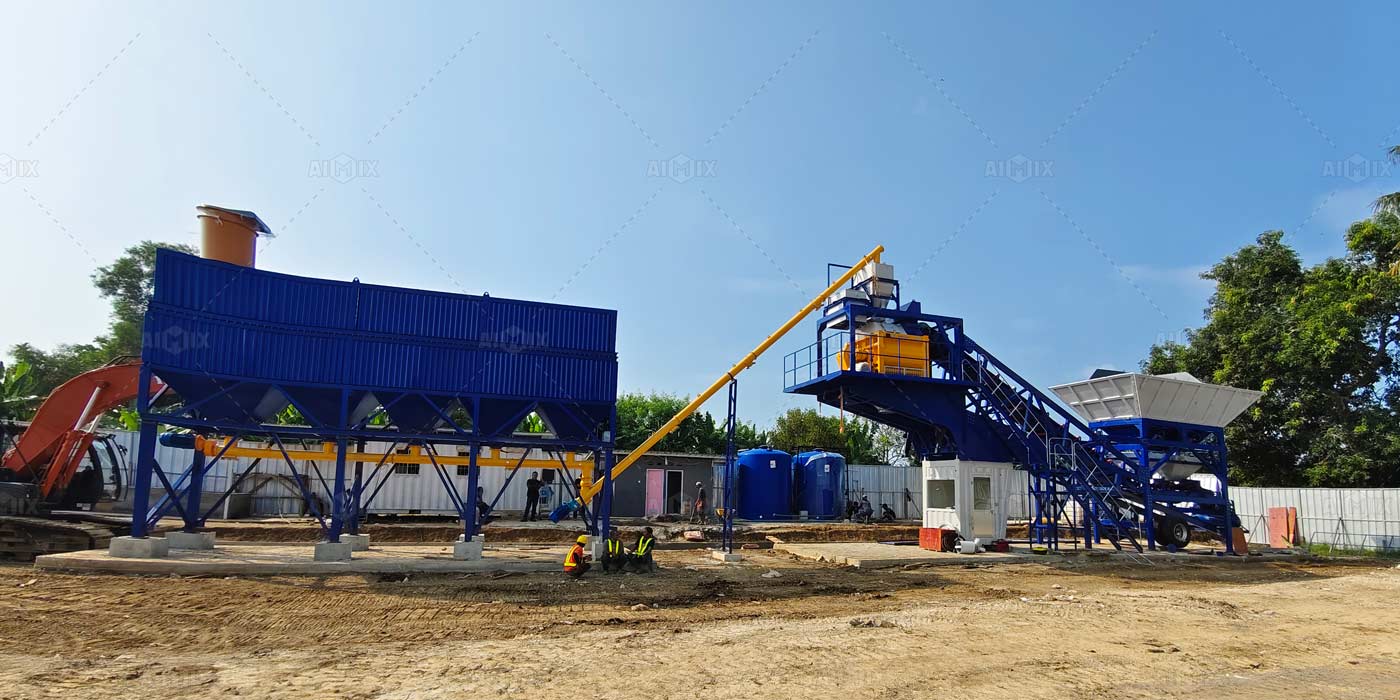
Understanding the Real Demands of a 500 m Bridge Project
Before evaluating equipment capacity, it is important to understand the construction rhythm of a bridge project. In Java, most bridge projects include foundation works, pier construction, girder casting, and deck slab pouring.
Each stage requires different concrete volumes and timing. So, production is not always continuous, but highly segmented and schedule-driven.
Peak Concrete Demand vs Daily Production Needs
In peak pouring stages, a 500 m bridge may require 1,500–3,000 m³ of concrete per day. A 60 m³/h mobile plant can produce around 480–600 m³ in an 8–10 hour working window.
This shows a clear gap in peak demand, but it does not automatically mean the plant is unsuitable. Instead, it means planning becomes more important than raw capacity.
For many contractors, the real challenge is not total volume, but timing consistency and supply stability during key structural pours.
Why Mobile Batching Plants Are Suitable for Bridge Projects in Java
After understanding demand, we need to evaluate why mobile systems are widely used in bridge construction. In Java, construction sites often face limited space, traffic congestion, and long transport distances.
This is where mobility becomes a major advantage rather than just a feature.
You can explore more technical configurations of batching plant concrete systems designed for different project scales and site conditions.
On-Site Flexibility and Reduced Transport Distance
A 60 m³/h mobile plant allows contractors to produce concrete directly near the bridge segments. This reduces dependency on long-distance truck delivery.
As a result, concrete arrives fresher, and quality stability improves significantly. At the same time, fuel cost and transportation delays are reduced.
Moreover, when the project shifts from abutment to mid-span construction, the plant can move quickly to follow the working zone.
This flexibility is especially valuable in Java, where construction space is often limited.
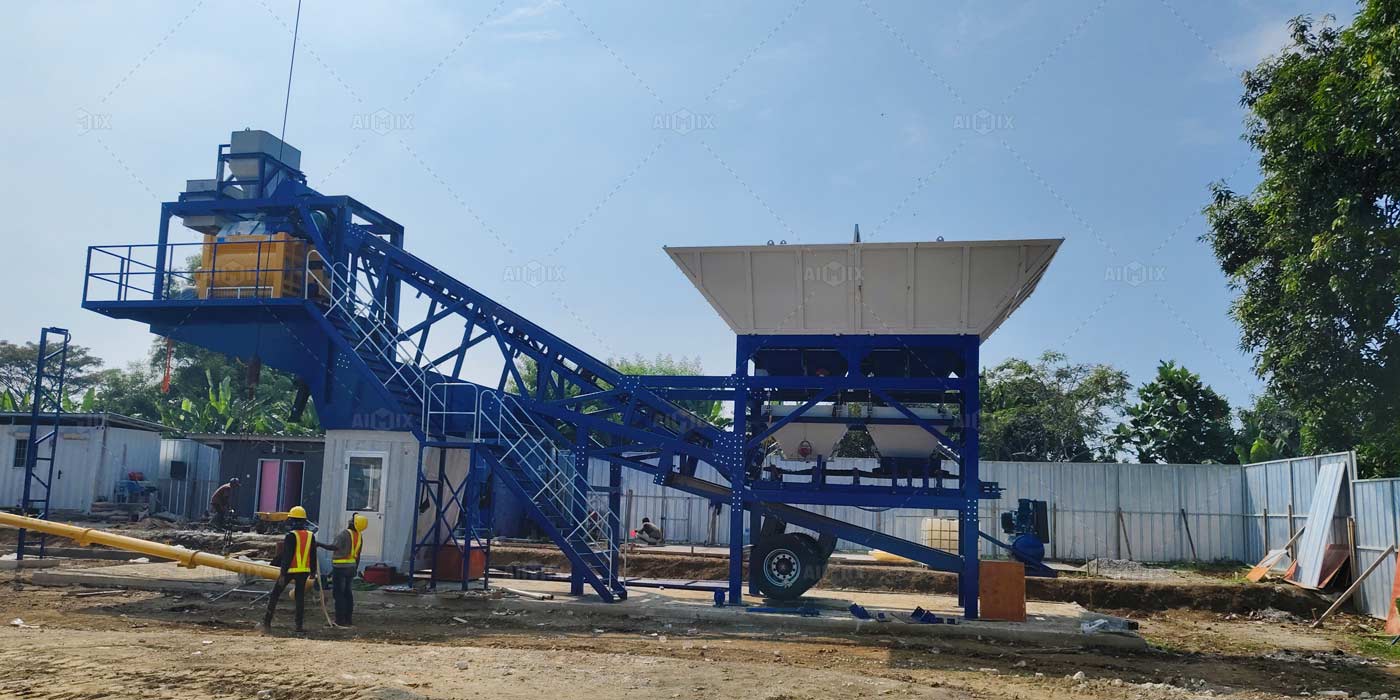
Production Efficiency and Real Operating Performance
However, capacity is only one part of the equation. Efficiency, uptime, and coordination matter just as much in real construction environments.
So, let’s evaluate how a 60 m³/h system performs under real working conditions.
Stable Output for Staged Construction Work
Bridge construction does not require maximum output every day. Instead, it depends on stage-based pouring cycles.
In foundation and pier works, a 60 m³/h plant can easily meet demand. Even during beam casting, it can support continuous production if properly scheduled.
If higher output is needed temporarily, contractors often combine multiple plants or coordinate with external supply sources. This hybrid strategy is common in large infrastructure projects.
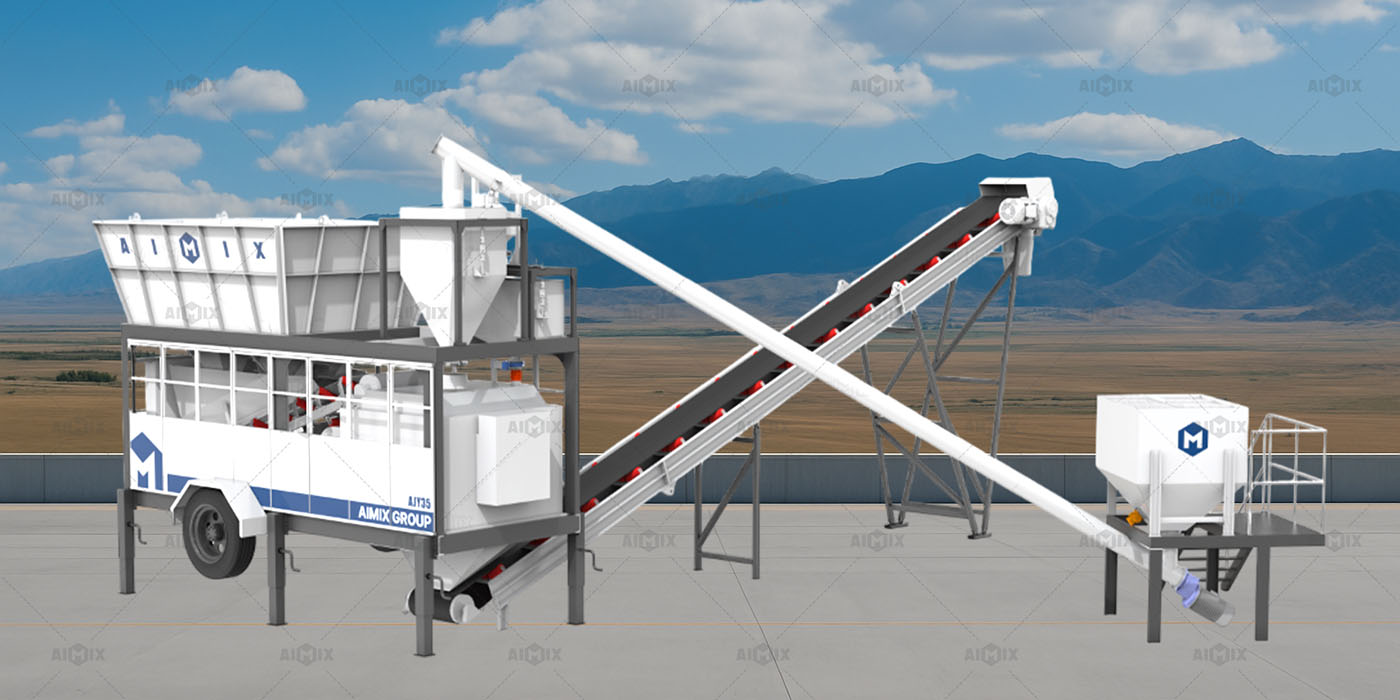
For tighter job sites, some contractors choose a mobile batch plant because it reduces setup time and improves relocation efficiency across multiple bridge segments.
Site Constraints and Environmental Challenges in Java
While equipment performance is important, real project success depends heavily on site conditions. Java presents several challenges that directly affect concrete production efficiency.
Humidity, Traffic, and Space Limitations
High humidity in Indonesia can influence aggregate moisture content, which requires more precise batching control. In addition, traffic congestion often slows down ready-mix truck delivery.
Therefore, on-site production becomes a more reliable option.
Limited working space near river crossings and elevated bridge sections also restrict plant installation. In this case, compact systems become more practical than traditional stationary setups.
That is why many contractors also consider a mobile micro concrete mixing plant when space is extremely limited and fast deployment is required.
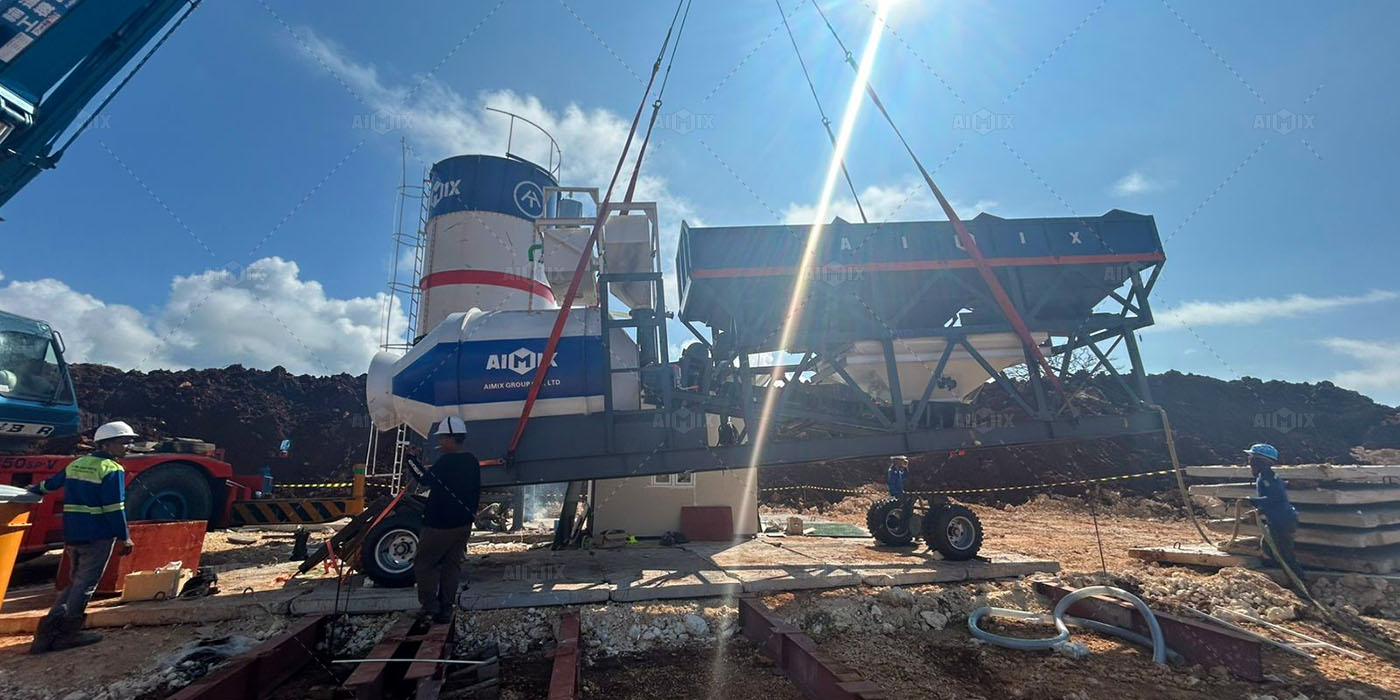
How to Maximize a 60 m³/h Plant for Bridge Construction Success
To fully utilize a 60 m³/h mobile plant, contractors must focus on planning and coordination rather than relying only on equipment power.
With proper strategy, even medium-capacity systems can support large infrastructure projects effectively.
Smart Scheduling and Modular Construction Strategy
First, divide the bridge project into clear pouring phases. Then, schedule production based on real-time demand instead of maximum theoretical output.
This avoids both overproduction and idle time.
Second, reduce waiting time between mixing and pouring by positioning the plant close to active working zones.
Finally, adjust working shifts during peak stages to maintain continuous supply.
In many cases, contractors also use a modular compact concrete batching plant for supplementary production when demand increases during critical structural stages.
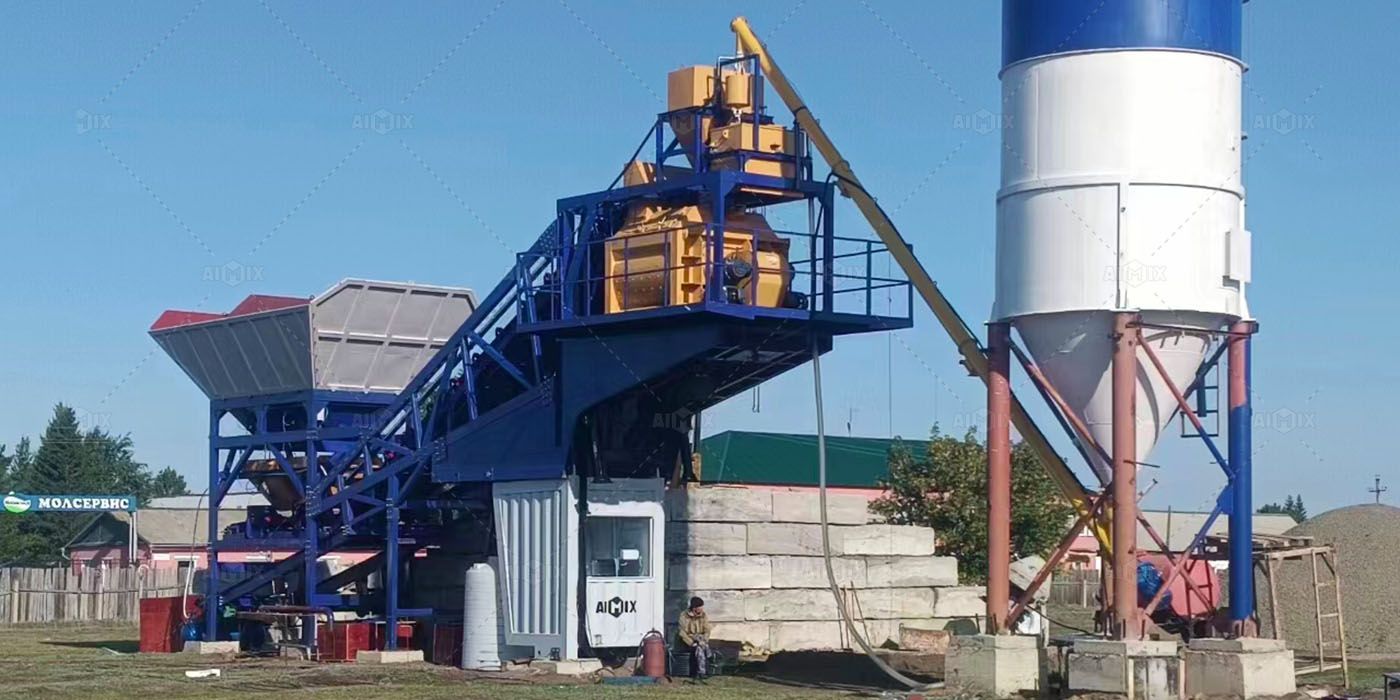
Conclusion: Is It Enough for a 500 m Bridge Project?
A 60 m³/h mobile concrete batching plant can support a 500-meter bridge project in Java, but its success depends on planning, scheduling, and system coordination.
It is not just about raw output capacity, but about how efficiently the plant integrates into the construction workflow.
For most medium-scale bridge projects, it offers strong advantages in mobility, cost control, and operational flexibility. However, during peak pouring periods, contractors may need additional coordination strategies to ensure continuous supply.
If you are planning a bridge project in Indonesia, choosing the right batching system can directly affect your construction speed and cost efficiency.
A well-optimized mobile solution can help you complete projects faster while maintaining stable concrete quality throughout all construction stages.
If you want to improve your bridge construction efficiency in Java, now is the right time to evaluate a mobile batching solution that matches your real project demand and site conditions.