Precast concrete production is a highly organized, heavy-load, and time-sensitive industrial process. From casting large beams and slabs to moving finished components for storage and transport, every stage depends on precise and reliable material handling. Among all lifting equipment used in precast yards, heavy duty gantry cranes play a central role.
These cranes are not just auxiliary equipment—they are the backbone of production flow. Without them, modern precast yards would struggle with inefficiency, safety risks, and production bottlenecks. This article explains why heavy duty gantry cranes have become essential in precast concrete yards, covering their operational value, technical advantages, and real-world applications.
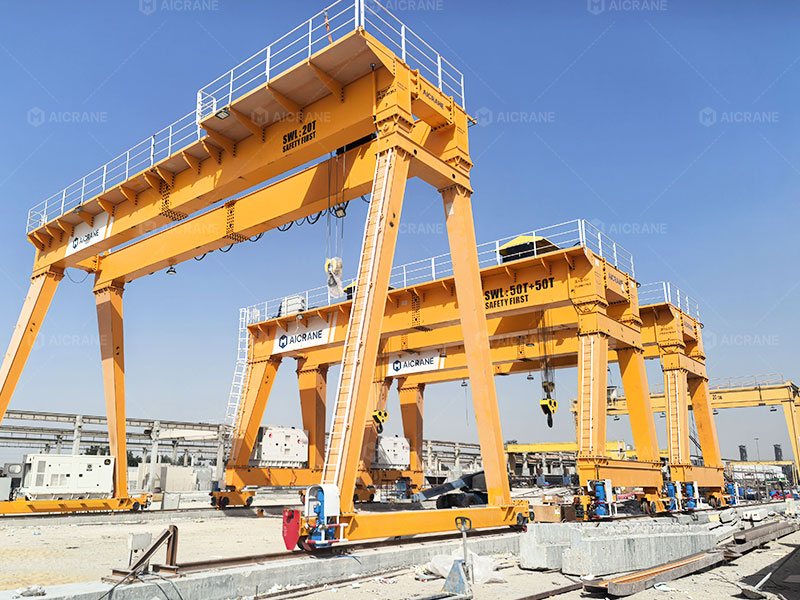
1. The Nature of Precast Concrete Production Requires Heavy Lifting
Precast concrete components are fundamentally different from typical construction materials. They are:
- Extremely heavy (often ranging from 10 tons to over 300 tons per piece)
- Large in size (beams, slabs, tunnel segments, bridge girders)
- Fragile at edges during lifting and curing stages
- Repetitively handled throughout production stages
Unlike conventional construction sites where materials are assembled in place, precast yards manufacture components in controlled environments. This means every product must be:
- Cast
- Cured
- Demolded
- Transferred
- Stored
- Loaded for transport
Each of these steps involves heavy lifting. Forklifts or small cranes are simply not capable of handling such loads safely or efficiently. This is where heavy duty gantry cranes become indispensable.
2. High Load Capacity Meets Industrial Demands
One of the primary reasons precast yards rely on gantry cranes is their high lifting capacity, which can easily range from 20 ton to over 500 ton depending on the project.
F=mg
Precast components can be extremely dense, and lifting force requirements increase quickly with scale. Heavy duty 20 to 500 ton gantry cranes are engineered with:
- Reinforced steel structures (often Q355B or higher grade steel)
- Double girder configurations for stability
- High-duty classification (A5–A8 depending on application)
- Multiple lifting configurations (hook, spreader beam, lifting clamps)
This allows them to handle:
- Precast bridge girders
- Tunnel segments
- Large wall panels
- Hollow core slabs
- Industrial modular structures
Without such capacity, production would be forced to limit product size or rely on unsafe multi-crane lifting methods.
3. Continuous Workflow Efficiency in Precast Yards
Precast production is a continuous cycle. A delay in one stage affects the entire yard. Heavy duty gantry cranes ensure smooth workflow between production zones.
Typical workflow supported by gantry cranes includes:
- Demolding components from casting beds
- Transporting elements to curing areas
- Moving finished products to storage yards
- Loading onto trucks or trailers
Because gantry cranes operate on rails or heavy-duty tires, they can cover large working areas without repositioning infrastructure. This eliminates:
- Idle waiting time for forklifts
- Manual repositioning of heavy loads
- Traffic congestion inside the yard
The result is a highly synchronized production flow, which directly increases output per day.
4. Precision Handling of Large and Fragile Concrete Elements
Precast concrete is strong in compression but vulnerable to cracking during early handling stages. Even minor impact or uneven lifting can damage expensive components.
Heavy duty gantry cranes provide:
- Smooth lifting and lowering motion
- Anti-sway systems for load stabilization
- Precise positioning control (often PLC-based systems)
- Multi-point lifting spreader beams for balanced load distribution
This precision is especially critical for:
- Thin-walled concrete panels
- Long-span bridge beams
- Pre-stressed components
By reducing shock loads and uncontrolled movement, gantry cranes significantly reduce product damage rates, which directly saves production cost.
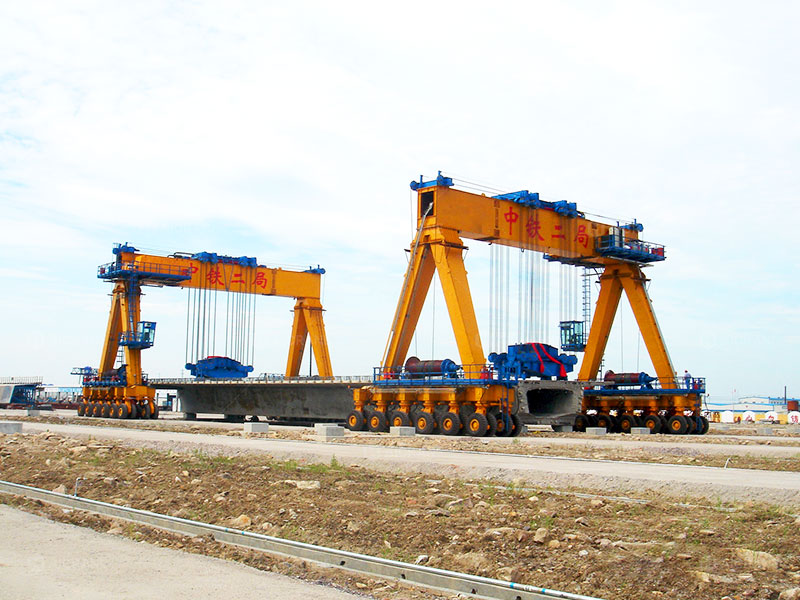
5. Flexibility Across Different Precast Yard Layouts
Precast yards vary greatly in size and layout depending on production capacity and product types. Heavy duty gantry cranes offer high adaptability:
Rail-Mounted Gantry Cranes
- Ideal for large, fixed production yards
- High stability and lifting capacity
- Common in bridge and infrastructure projects
Rubber Tyred Gantry Cranes (RTG)
- Highly mobile across different zones
- No need for rail installation
- Suitable for flexible or expanding yards
Semi Gantry Cranes
- One side supported by rail, another by ground runway
- Ideal for constrained workshop environments
This flexibility allows precast manufacturers to scale operations without redesigning the entire facility.
6. Improved Safety Compared to Alternative Handling Methods
Safety is one of the most critical concerns in precast yards. Heavy concrete components pose serious risks if not handled properly.
Compared to forklifts or manual systems, gantry cranes offer:
- Reduced human exposure to load zones
- Stable lifting path without sudden shifts
- Centralized operator control (cab or remote)
- Built-in overload protection systems
- Emergency stop and safety interlocks
Additionally, advanced systems often include:
- Wind speed monitoring (for outdoor RTG cranes)
- Load moment indicators
- Automatic fault diagnostics
This significantly reduces accident risks in high-load environments.
7. Cost Efficiency Over the Long Term
While heavy duty gantry cranes require higher initial investment, they provide significant long-term savings:
- Lower labor requirements
- Reduced material damage
- Faster production cycles
- Lower equipment rental dependency
- Minimal downtime due to mechanical reliability
For large precast facilities, a single crane system can replace multiple smaller lifting machines, reducing maintenance complexity and operational costs.
8. Integration with Modern Precast Automation Systems
Modern precast yards are increasingly adopting automation and digital control systems. Heavy duty gantry cranes integrate well with:
- PLC control systems
- Remote operation interfaces
- RFID tracking of precast elements
- Smart yard management systems
This enables:
- Real-time tracking of components
- Automated lifting sequences
- Optimized yard logistics planning
- Data-driven maintenance scheduling
Such integration transforms traditional precast yards into smart manufacturing environments.
9. Supporting Large-Scale Infrastructure Projects
The global construction industry is moving toward mega infrastructure projects such as:
- High-speed rail networks
- Long-span bridges
- Urban metro tunnels
- Modular high-rise buildings
These projects require massive precast elements that cannot be handled by conventional lifting equipment. Heavy duty gantry cranes are therefore essential for:
- High-volume production output
- Consistent quality handling
- Fast turnaround time
Without them, many modern infrastructure projects would face serious logistical constraints.
10. Conclusion
Heavy duty gantry cranes are not just equipment in precast concrete yards—they are a core production system component. Their ability to handle extreme loads, ensure precise movement, improve safety, and support continuous workflow makes them indispensable in modern precast manufacturing.
As the demand for faster, larger, and more complex concrete structures continues to grow, the role of gantry cranes will become even more critical. From infrastructure megaprojects to modular construction, these cranes provide the strength, control, and reliability that precast production depends on.
In short, without heavy duty gantry cranes, modern precast concrete yards would not be able to achieve the scale, efficiency, or safety standards that today’s construction industry demands.