Gantry cranes are critical equipment in industries ranging from steel mills to shipyards, concrete plants, and container terminals. Their ability to handle loads from 5 tons to 500 tons or more makes them indispensable for material handling, heavy equipment installation, and logistics operations. However, ensuring safe and reliable operation requires strict adherence to internationally recognized safety standards, particularly when dealing with high-capacity lifting tasks. Among these, ISO (International Organization for Standardization), FEM (Fédération Européenne de la Manutention), and CMAA (Crane Manufacturers Association of America) provide essential guidance for design, operation, inspection, and maintenance.
Understanding Gantry Crane Capacity
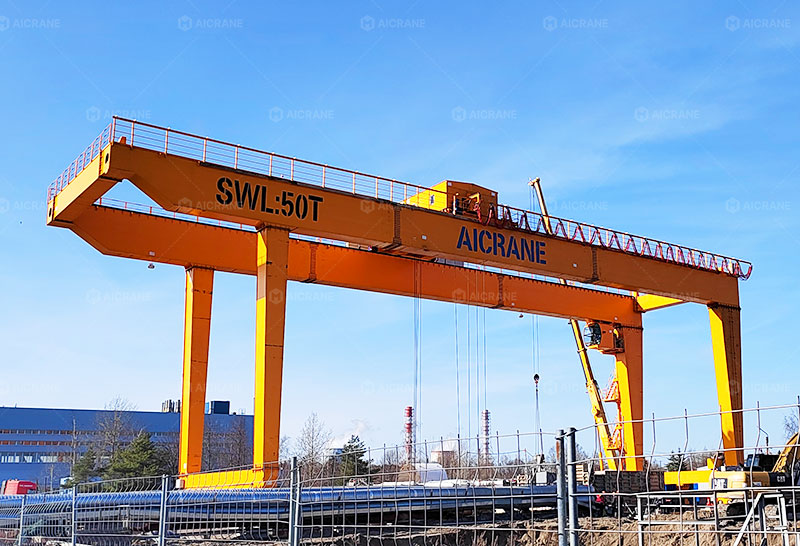
Before diving into safety standards, it is important to clarify what crane capacity means. The capacity of a gantry crane for sale refers to the maximum load weight it can safely lift. For example, a 20-ton gantry crane is designed to lift loads up to 20 tons under specified conditions. Exceeding this limit can result in catastrophic failure, structural damage, or severe safety hazards. Capacity considerations also extend to lifting height, span, duty cycles, and load distribution, all of which are addressed in international standards.
ISO Standards for Gantry Crane Capacity and Safety
The ISO 4301 and ISO 9927 series are widely referenced for general crane classification, operation, and inspection:
- ISO 4301 defines the classification of cranes based on duty, which directly influences safe working loads. For instance, a 50 ton gantry crane in a heavy-duty steel fabrication plant would typically fall into duty class A6 or A7, requiring higher safety factors.
- ISO 9927 outlines inspection procedures for cranes, emphasizing periodic checks of mechanical components, load hooks, wire ropes, and structural integrity. By following these guidelines, operators can ensure that a 100-ton gantry crane maintains its rated capacity safely throughout its service life.
- ISO 8686 and related standards provide guidance on structural and mechanical design to withstand both static and dynamic loads, preventing accidents caused by overloading, excessive sway, or sudden load shifts.
ISO standards are recognized worldwide and form the basis for local regulations, ensuring a harmonized approach to crane safety.
FEM Standards for European Gantry Cranes
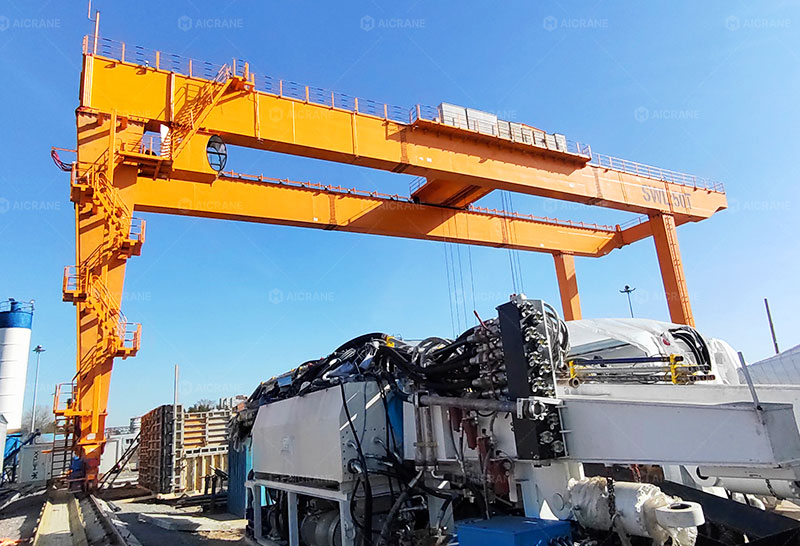
The FEM (Fédération Européenne de la Manutention) standards focus on crane design, duty, and safety systems in European applications. Key FEM publications include FEM 1.001, FEM 9.755, and FEM 10.001:
- FEM 1.001 provides general rules for design and calculation, including safety factors for cranes ranging from 5 tons to 500 tons, covering both single and double girder gantry crane configurations.
- FEM 9.755 emphasizes the calculation of dynamic effects, such as crane acceleration, braking, and load sway, which are critical when handling heavy loads like 120-ton ship components or 250-ton steel molds.
- FEM 10.001 outlines periodic inspection and maintenance, including load testing and verification, ensuring cranes do not operate above their safe rated capacity.
European manufacturers frequently adopt FEM standards to certify compliance with CE marking requirements, reinforcing both operational safety and liability coverage.
CMAA Standards in the United States
The CMAA (Crane Manufacturers Association of America) provides authoritative guidance for gantry crane design, capacity ratings, and safety. Their most widely referenced publications are CMAA Specification No. 70 for top-running bridge & gantry cranes, and CMAA Specification No. 74 for under-running cranes:
- CMAA 70 & 74 detail load rating classifications, such as A3 (light service) through D8 (heavy service), which inform how a gantry crane should be designed and operated.
- The standards prescribe factor of safety requirements for structural components, hoists, and end trucks, ensuring that even at full capacity, cranes maintain stability and performance.
- Inspection and maintenance guidance within CMAA standards includes periodic testing of lifting mechanisms, verification of rated capacity, and monitoring of wear and fatigue in structural members and wire ropes.
By following CMAA standards, manufacturers and operators in North America can reliably manage heavy lifts, from 10-ton warehouse loads to 500-ton industrial machinery.
Common Safety Requirements Across ISO, FEM, and CMAA
Despite regional differences, these standards share common principles to ensure safe operation of gantry cranes:
- Rated Capacity Enforcement: Always operate within the specified load rating. Overloading a gantry crane can compromise structural integrity and increase accident risk.
- Duty Classification: Selecting cranes based on expected operational frequency and load type, such as A5 duty for continuous lifting in steel mills.
- Structural Integrity: Ensuring beams, end trucks, and legs are designed to withstand maximum load with proper safety factors.
- Regular Inspection: Frequent checks of hooks, wire ropes, brakes, and hoists prevent overcapacity incidents.
- Load Testing: Cranes must undergo load tests up to 125% of rated capacity to verify performance under extreme conditions.
- Operator Training: Certified operators must understand crane capacity, load distribution, and emergency procedures.
High-Capacity Gantry Cranes: Special Considerations
For cranes with capacities above 100 tons, additional considerations are essential:
- Dynamic Load Effects: High-capacity heavy duty gantry cranes, such as 200-ton or 300-ton gantry cranes, must account for inertia, load sway, and acceleration forces. FEM standards provide formulas to calculate dynamic stresses and ensure safety.
- Structural Reinforcement: Overhead beams and end trucks require high-strength steel and reinforced welds to handle extreme loads.
- Safety Devices: Overload alarms, anti-collision sensors, and sway control systems help prevent incidents when lifting very heavy loads.
Conclusion
Safety in gantry crane operation is inseparable from adherence to international standards. ISO, FEM, and CMAA provide comprehensive guidance for designing, operating, inspecting, and maintaining cranes, ensuring that rated capacities – from 5 tons in small workshops to 500 tons in heavy industries—are respected. Following these standards reduces the risk of accidents, protects personnel and equipment, and maximizes operational efficiency.
Operators, engineers, and managers must consider not only the rated capacity but also duty classification, dynamic effects, load distribution, and periodic inspections. By integrating these principles, industries can safely and efficiently utilize gantry cranes, whether for steel fabrication, precast concrete, shipyards, or container handling, reinforcing the critical role of crane capacity in industrial safety and productivity.