The perception of a boom concrete pump with an integrated planetary mixer as a capital-intensive asset is a common yet often misleading calculation. Many contractors and construction firms instinctively compare the upfront purchase price to the per-project rental fee of a standard pump, concluding that ownership is prohibitively expensive. This analysis fails to account for the fundamental economic transformation this combined machine enables. It is not merely a piece of equipment; it is a vertically integrated production and placement system that consolidates multiple cost centers into a single, controlled operation. When evaluated through the lens of total cost of operation, revenue generation potential, and strategic flexibility, the ownership equation shifts decisively. The machine’s true cost is revealed not in its invoice price, but in its capacity to displace subcontractor markups, eliminate logistical dependencies, and capture full margin on concrete work.
The Consolidation Advantage: Erasing Subcontractor Margins and Rental Premiums
Standard project economics for concrete placement involve layered costs. A general contractor typically pays a premium for ready-mix concrete delivered by a supplier, then pays a separate, often substantial, fee to a pumping subcontractor. Each entity in this chain incorporates its own overhead and profit margin. The concrete boom pump with planetary mixer dismantles this chain. It allows the owner to purchase raw materials—cement, aggregate, water—at base cost and produce concrete on-demand, directly at the project site. The profit margin that previously flowed to the ready-mix supplier is now retained. Simultaneously, the need for a pumping subcontractor vanishes; the placement service is performed in-house. This consolidation of two major cost lines creates a direct and significant improvement in gross profit per cubic yard placed, a financial benefit that accrues with every single project.

Direct Control Over the Most Critical Path Item: Time
Construction schedules are frequently dictated by the availability of specialty services like concrete pumping. Rented equipment and subcontractors operate on their own timetables, leading to potential delays, rushed work during limited rental windows, or overtime premiums. Ownership confers absolute scheduling sovereignty. The machine is deployed according to the optimal workflow of the project, not the supplier’s availability. It enables the execution of pours during off-peak hours to avoid heat or to meet critical path milestones without negotiation. This control over the project’s tempo prevents costly schedule overruns and enhances overall operational fluidity. The value of this scheduling autonomy, while difficult to quantify on a standard invoice, is a profound contributor to project profitability and client satisfaction.
The Planetary Mixer Difference: Quality, Efficiency, and Mix Versatility
The inclusion of a planetary mixer is not an ancillary feature; it is the core of the system’s economic and technical superiority. Unlike a simple drum mixer, a planetary mixer equipped on the concrete pumping machine for sale employs a complex gear-driven mechanism where multiple mixing stars rotate on their own axes while orbiting a central axis. This creates a highly efficient, homogeneous mix in a fraction of the time required by conventional methods.
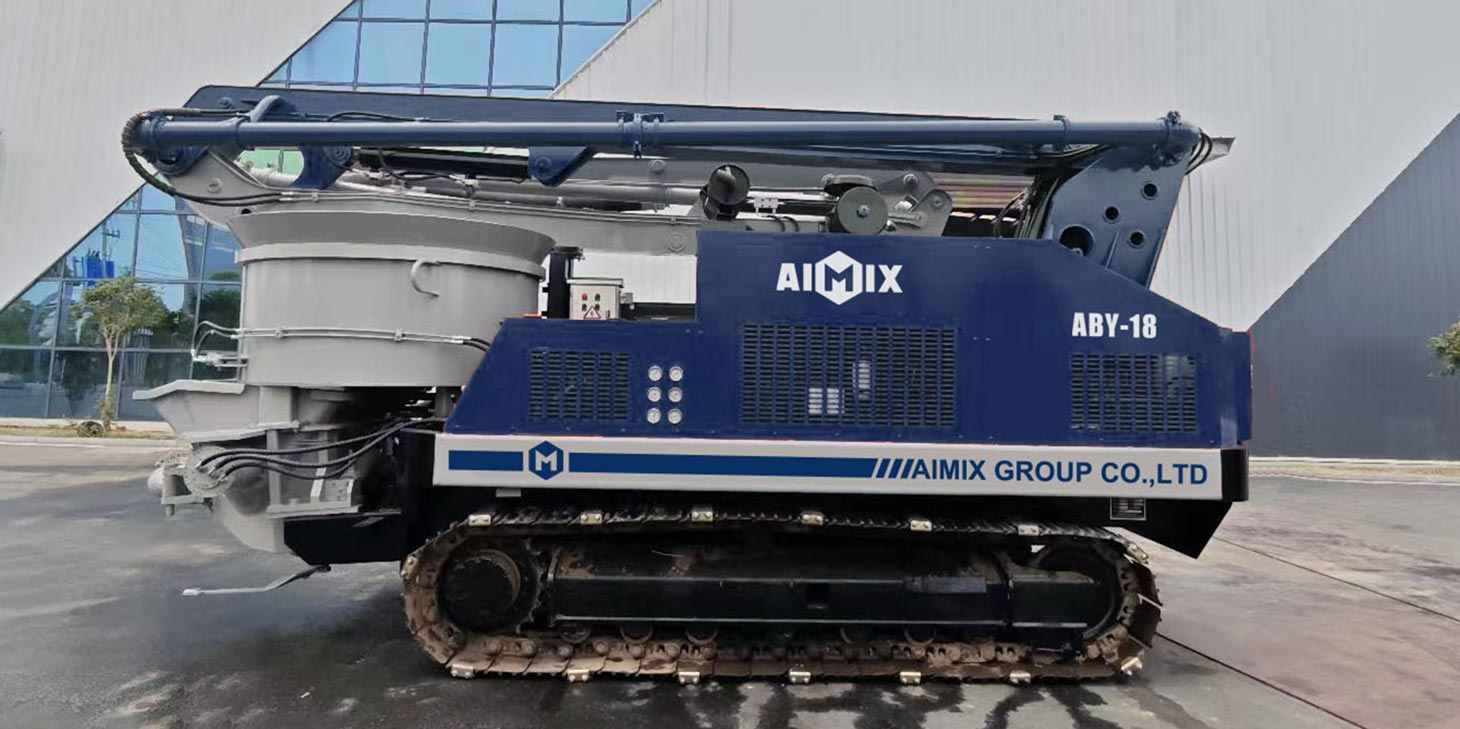
Superior Mix Quality and Reduced Waste
The intense, thorough blending action of the planetary mixer ensures complete integration of all components, including fibers and complex admixtures. This produces a consistent, specification-perfect concrete with optimal workability, directly reducing placement time and labor effort. Superior mix homogeneity minimizes the risk of pump blockages and structural imperfections, thereby reducing costly material waste and rework. The mobile concrete pump machine’s efficiency translates into more usable concrete from the same raw material input.
Unmatched Versatility for Specialized Applications
This mixing technology excels with stiff, zero-slump mixes used in pre-cast applications, fiber-reinforced concrete, and high-performance mortars. This versatility allows the owner to bid on and execute a wider, more profitable range of projects—from standard slabs to intricate architectural elements—without requiring additional, specialized mixing equipment. It transforms the machine from a general-purpose tool into a high-value, application-agnostic production cell.
The Long-Term Financial Architecture: Depreciation, Utilization, and Residual Value
A rational ownership model extends beyond operational savings to consider the asset’s financial behavior over a multi-year horizon. The purchase price is amortized over the machine’s useful life, not expensed in a single fiscal year.
High Utilization as the Key to Rapid Capital Recovery
The machine’s economic viability is predicated on achieving a high utilization rate. For a company with a steady pipeline of suitable projects, the consolidated margin captured on each cubic meter quickly offsets finance costs. The ownership model incentivizes the business development team to actively seek work that maximizes the asset’s use, creating a virtuous cycle of revenue generation and cost amortization. Idle time, the true enemy of equipment economics, is minimized through strategic scheduling and marketing the machine’s unique capabilities to new clients.
Durability, Serviceability, and Strong Residual Value
Well-engineered boom pumps with planetary mixers are built for durability with serviceable components. A proactive maintenance regimen preserves the asset’s functionality and, critically, its residual value. Unlike many pieces of construction equipment that depreciate rapidly, a well-maintained, versatile small concrete pump truck machine like this holds a significant portion of its value on the secondary market. This residual value represents a future financial resource, either as a trade-in for a newer model or as direct capital recovery upon sale. The initial investment is therefore partially recoupable, a factor never realized with spent rental fees.
Transforming Cost into Competitive Advantage
Ultimately, the machine reshapes a company’s competitive posture. It allows for more aggressive yet still profitable bidding on concrete scopes of work. It provides a unique selling proposition—guaranteed scheduling and certified on-site mix quality—that can win contracts. The capital outlay is not a simple expense; it is an investment in vertical integration, operational independence, and market differentiation. When the full spectrum of retained margins, scheduling benefits, versatility, and long-term asset value is calculated, the total cost of ownership is frequently lower than the perpetual, variable cost of external reliance. The machine pays for itself not by being cheap, but by making the business fundamentally more efficient and profitable.