When selecting a gantry crane for industrial lifting tasks, few design factors influence the crane’s overall performance as significantly as the girder type. Whether a crane uses a single girder or a double girder structure directly affects load capacity, lifting height, span, duty cycle, and even long-term maintenance cost. Understanding how girder type impacts maximum capacity is essential for industries such as manufacturing, steel fabrication, precast concrete handling, logistics, construction, and port operations.
This article explores in detail how girder type influences the maximum gantry crane capacity, the engineering principles behind it, and how to choose the right design based on your operational requirements.
1. Overview: The Role of the Girder in Gantry Crane Capacity
The girder is the primary load-bearing beam of a gantry crane for sale. It supports the hoist, trolley, and the lifted load, transferring forces to the supporting legs and ultimately the ground or rails. Because of this, girder design determines:
-
Maximum lifting capacity
-
Maximum allowable span
-
Structural rigidity
-
Resistance to bending and deflection
-
Fatigue life under cyclic loading
In simple terms, a stronger and stiffer girder allows the crane to carry heavier loads safely and efficiently.
2. Structural Differences Between Single and Double Girder Gantry Cranes
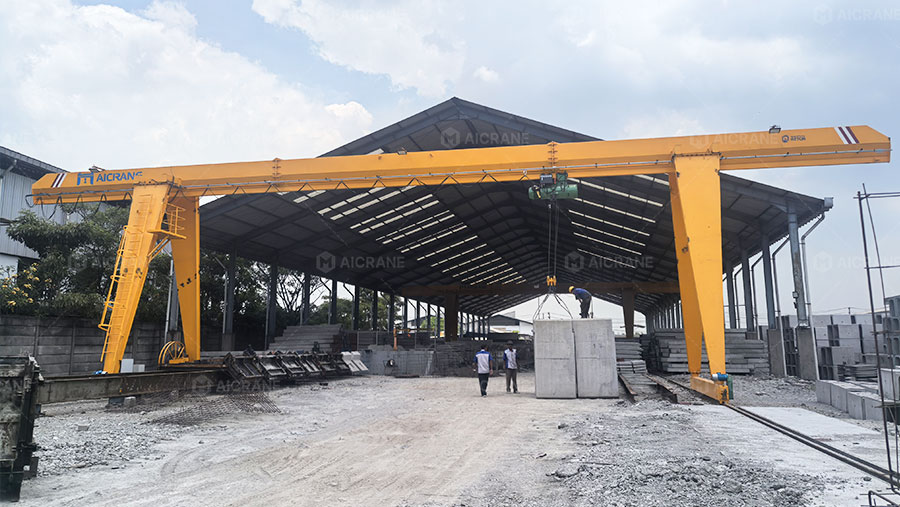
Single Girder Gantry Crane
A single girder gantry crane consists of:
-
One main beam
-
Top-running or under-running hoist
-
Simple trolley structure
-
Lighter steel frame
It is designed to be cost-effective, easy to assemble, and ideal for light to medium-duty lifting.
Typical capacity range:
1 ton – 20 tons (occasionally up to 32 tons with special design)
Typical applications:
Workshops, small fabrication sites, warehouses, maintenance tasks, outdoor yards handling light materials.
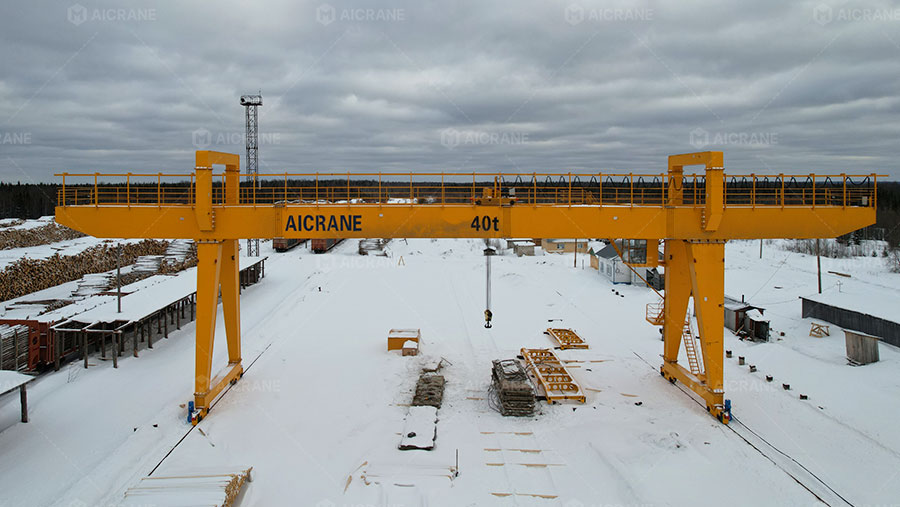
Double Girder Gantry Crane
A double girder gantry crane features:
-
Two parallel beams
-
Robust trolley frame running on rails mounted on top of the girders
-
Higher-strength structural components
-
Greater overall lifting height and stability
Typical capacity range:
20 tons – 500+ tons
Typical applications:
Industrial manufacturing, precast concrete lifting, steel coil handling, container yards, mining, shipyards, heavy fabrication plants.
3. Why Girder Type Directly Affects Maximum Capacity
A. Load Distribution and Structural Strength
A single girder must withstand all vertical loads and bending stresses alone.
A double girder shares the load across two beams, significantly reducing:
-
Bending stress
-
Deflection
-
Fatigue
-
Buckling risks
The combined stiffness of two girders increases load-bearing capability dramatically. This is the number one reason double girder gantry cranes support far higher capacities.
B. Reduced Deflection Enhances Capacity
Deflection limits are defined by crane design standards (FEM, CMAA, ISO, GB). Excessive deflection:
-
Reduces hoisting stability
-
Increases sway
-
Causes misalignment between legs
-
Accelerates wear
Double girders offer lower deflection ratios, enabling heavier loads and longer spans without compromising safety.
C. Increased Stability for High-Capacity Operations
A double girder crane’s structural box formed by the two beams and legs provides:
-
Better torsional rigidity
-
Higher lateral stability
-
Resistance to dynamic loading
This is especially important for:
-
Wind loads in outdoor operations
-
Long-travel at high speeds
-
Sudden dynamic forces during lifting or braking
-
Handling irregular or bulky loads
D. Stronger Trolley and Hoist Support System
Single girder cranes use a lower-strength hoist system (usually a monorail-type hoist).
Double girder cranes accommodate:
-
Open winch design
-
High-power motors
-
Robust gearboxes
-
Larger wire rope drums
-
Better cooling and duty cycle
These advanced hoist systems are essential for loads exceeding 20–30 tons.
E. Increased Lifting Height for Heavy Loads
In a single girder crane, the hoist hangs beneath the girder, reducing lifting height.
In a double girder crane, the trolley runs on top of the girders, enabling:
-
Higher lifting height
-
Precise load positioning
-
Better use of vertical space
This also allows the crane to lift heavier loads without reducing clearance or modifying building height.
4. Engineering Analysis: How Girder Type Determines the Actual Capacity
Single Girder Capacity Factors
-
Limited cross-sectional strength
-
Lower moment of inertia
-
Lower resistance to fatigue
-
Tight deflection limits
-
Smaller trolley and hoist options
As capacity increases, the girder must be made thicker and heavier, increasing cost. Past a certain point (~20–32 tons), it becomes economically inefficient to stay with a single girder design.
Double Girder Capacity Factors
-
Double the load-bearing beams significantly increase load tolerance
-
Larger support surface for trolley rails
-
Heavier mechanical components can be installed
-
Larger cross-sections reduce stress
-
Allows for longer spans with heavy loads
-
Safer under dynamic or off-center loading
These advantages enable gantry crane capacity options up to 500 tons or more.
5. How Girder Type Influences Span and Working Conditions
Single Girder Cranes
-
Best suited for short to medium spans (≤20–30 meters)
-
Lower duty cycles (A3–A5)
-
Not ideal for harsh environments
-
Lower running speed
Double Girder Cranes
-
Support long spans (30–60+ meters)
-
High duty cycles (A5–A8)
-
Reliable for 3-shift continuous operation
-
Capable of functioning in wind, extreme temperature, and heavy-duty conditions
6. Cost Comparison and Its Impact on Capacity Decisions
Single Girder Advantages
-
Lower cost
-
Faster production time
-
Lighter structure means lower foundation cost
-
Easy to install
But these cost savings apply only for light to medium loads.
Double Girder Advantages
-
Higher initial cost
-
More steel, more fabrication work
-
Higher transportation cost
However, for high-capacity lifting, the cost per ton of lifting capacity is actually lower in double girder cranes due to superior structural efficiency.
7. When Should You Choose Each Girder Type?
Choose a Single Girder Gantry Crane When:
-
Load capacity is below 20 tons
-
Span is moderate
-
Working environment is light-duty
-
Budget is limited
-
Installation speed is a priority
Choose a Double Girder Gantry Crane When:
-
Load capacity is over 20 tons
-
You need a long span
-
You require high lifting height
-
Operation involves three shifts or heavy duty
-
Working environment is harsh
-
Loads are bulky or irregular
-
Precise and safe control is required
8. Conclusion: Girder Type Is One of the Biggest Determinants of Gantry Crane Capacity
The difference between single girder and double girder gantry cranes is more than structural – it is foundational to the crane’s performance. Double girder cranes are engineered for high capacity, high duty, and high stability, while single girder cranes serve lighter and more economical applications.
Understanding how girder type affects maximum capacity allows businesses to:
-
Select the right crane for current needs
-
Avoid future performance limitations
-
Improve operational safety
-
Extend crane service life
-
Optimize long-term investment
When in doubt, businesses handling heavy, frequent, or critical lifting loads should consider double girder gantry cranes as the safer and more durable solution.